£75,000 Salary to Rent the Average London Home: What It Means for Renting in South West London
Aug 14th, 2026
Aug 14th, 2026
There is plenty happening in the London rental market right now, and much of it points the same way: renting in the capital is getting more difficult and more expensive – and there is mounting evidence it is for reasons that many in the lettings industry predicted and even warned the government about, but which the general public might not expect.
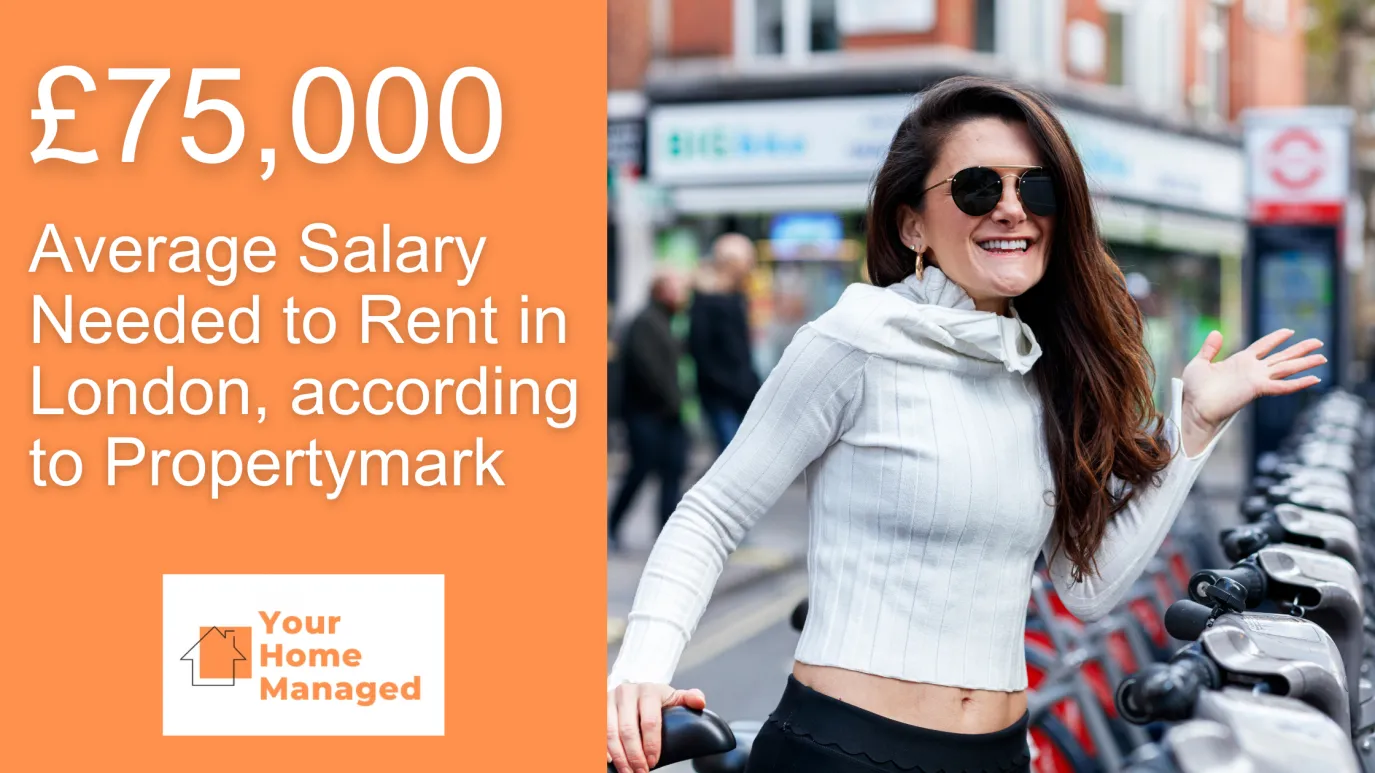
According to Propertymark's latest rental price tracker, the representative annual salary needed to secure an average-priced rental home in London has climbed to £74,520 – up from £70,050 a year ago, an increase of 6.4%.
It follows a sharp month-on-month jump in average London rents, from £2,385 to £2,484 – the strongest monthly growth of any UK region.
In fact, our own research, using the Dataloft platform, drawing market data from Information Works, shows that asking rents across the whole of Greater London have risen to £2,788.
That is a 6.5% jump in just one month, and is a whole 9.1% higher than a year ago.
The scale of the increase has caught plenty of people off guard – including letting agents.
The Rightmove Rental Trends Tracker shows asking rents up 2.9% year-on-year in the second quarter of 2026, up from just 1.4% the quarter before, and the strongest rate of growth in two years. London, for the first time since 2023, is outpacing the rest of the country.
Much of this is being linked to one specific cause: the Renters' Rights Act's ban on rental bidding wars, which came into force on 1 May 2026.
Landlords and agents can no longer accept offers above the advertised asking rent. It is a measure brought in to protect tenants, but what it has meant in practice – and this is precisely the issue that we as an industry lobbied the government to reconsider – is that instead of letting competing tenants bid a property up after listing, many landlords are simply setting the advertised figure higher from the outset.
They are doing it to protect their own interests, and are finding that tenants are willing to go there.
It may be frustrating for tenants, but commercially the behaviour isn't difficult to understand. Every time two tenants reach asking rent in their offers to take a property, it is likely that at least one of them would have gone a bit further. It is little surprise that landlords are building in the cushion that allows that to happen. Again, I have said this already, but this outcome was predicted and raised with the government when the Renters’ Rights Bill was drafted. Now that it has become an Act of Parliament, it is a reality that causes real-life problems for tenants whose affordability is already stretched, in a market that is so competitive.
As far as cities go, you’ve probably heard the phrase that London is a collection of villages.
We cover a wide patch of South West London, and asking rents here vary significantly, often even street by street, let alone area by area.
The truth is that whilst it is possible to provide an average, of course, there isn’t a truly reflective one that represents every part of South West London – let alone the city as a whole.
Renting in London is challenging for tenants, but we are here to help, and there is still every possibility to find something that fits your budget, provided you know where to look.
We do need to know your budget, and we need to apply that to affordability calculations. But once we know that, it helps us greatly to know what you are looking for and why; where you are looking for and why.
House not flat? Why? What is it about a house? The garden? So, how about a flat with a garden in that case? What is it about the garden? The outside space? Would a large balcony be a compromise? You need three bedrooms – why? Because you work from home and need a study – OK; this two-bedroom apartment is in a complex which offers a co-working hub – would that be a compromise?
If we know – really know the reasons why you are searching for particular things, we can help far better.
And the same goes for areas.
You want to live in Wimbledon Village? Why? Because you love the vibe here and it’s a good commute to work in the City? Then let me show you Raynes Park, just to the west and still an easy walk to Wimbledon Village itself if you want to enjoy it, but with a quiet, affluent vibe of its own, lovely little high street, and a direct mainline straight into Waterloo?
This is the benefit of real local knowledge – and it might mean finding the property you really want at prices you can more easily afford.
Let’s finish off by taking a quick look at some great areas in South West London that don’t always get the kudos they deserve:
* * *
Colliers Wood – average rents here sit at around £1,808 per calendar month. Sitting between Wimbledon and Tooting, Colliers Wood is roughly 20 minutes into central London on the Northern line and whilst perhaps less well-known in the past it is gaining a reputation as one of South West London's better-value postcodes. The Tandem Centre and Priory Retail Park offer good shopping options, and the Wandle Trail is excellent for riverside walks and cycling. Merton Abbey Mills is home to a Saturday artisan market, and is a lovely little pocket of history by the river.
Streatham – average rents around £1,816 per month – although a house here does rise to an average £2,514 per month. There are three separate stations in the immediate area – Streatham, Streatham Hill and Streatham Common, and trains run into Victoria, London Bridge and Blackfriars, whilst Brixton – with its Victoria line link – is only a few minutes away. For tenants wanting a bit of vibrancy, it’s a lively place to be with a genuinely good high street and a particularly strong café and restaurant scene. We also have the benefit of both Streatham Common and The Rookery for open green space. The area is known for its Victorian and Edwardian terraces, so those tenants after a bit more period character should certainly keep their eye out here.
Morden – average rents around £1,548. Morden sits at the very southern end of the Northern line, which – as the first stop out – usually comes with the small daily perk of a guaranteed seat into town, unless something particularly extraordinary is happening. Even though it is the furthest station south of central London on the Northern Line, it is still less than half an hour into the City; 28 minutes to Bank, in fact. Beyond the commuter base at much more accessible rental prices, the local area has so much to offer. Morden Hall Park is beautiful – a large slice of National Trust green space, with picturesque walks through the park, including a wooden boardwalk through a managed wetland, and there is a lovely café on site. Then again, the local High Street is also particularly well-served, not just with a number of cafes and restaurants, but also shopping options like Sainsbury's, Lidl and Iceland. It also offers similar easy access to the Tandem Centre's larger retail options as mentioned in the section on nearby Colliers Wood. It is popular with families and first-time renters for a reason: strong local schools and perhaps a noticeably slower pace of life, without giving up the tube.
A £75,000 salary requirement might be the London average, but it doesn’t have to be the South West London reality, not if you know what you’re looking for – or, more to the point, not if we know.
With rents moving as fast as they currently are, this kind of local knowledge – not just about rents but about the areas themselves – is really valuable.
If you're weighing up your options and wondering where your budget might stretch to, get in touch with us here at Your Home Managed for a friendly chat with our team, so we can talk you through what's realistically available right now.
We use cookies to give you the best possible experience on our site.
For more information click here.