What's Cool for Renters in 2026? Why South London landlords need to think differently about how homes handle the heat
Jul 11th, 2026
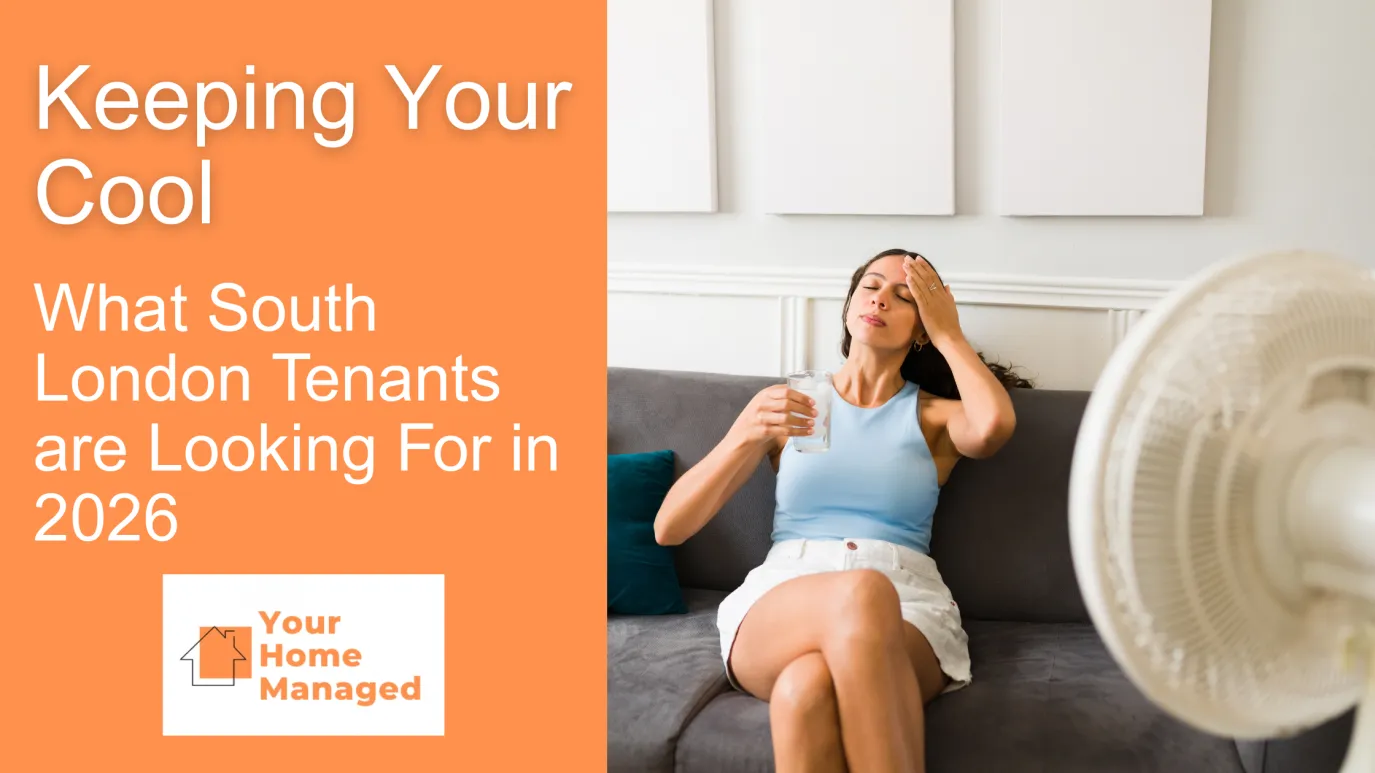
Jul 11th, 2026
For years, the standard tenant wish list has barely changed: good transport links, a bit of outside space in an ideal world, good storage, and — since the pandemic — somewhere to put a desk.
More recently, we've all got used to talking about energy bills, as more tenants focus on the energy efficiency and insulation qualities of properties in terms of how well they can handle the heat of summer.
Something else is creeping onto the list.
The question is no longer so much of “am I going to keep warm in this place in January?” any more. Increasingly, it's “is living here going to drive me crazy in July?”
Managing rented properties across Southwest London, we definitely already have a feel for this.
Our patch is full of Victorian and Edwardian homes, converted mansion blocks and top-floor flats with south-facing aspects that might be wonderful in April and May, but are becoming brutal in a summer heatwave.
And as our summers get hotter and less predictable, that's starting to matter to tenants in a way it simply didn't five or six years ago. In fact, it’s starting to shape the way tenants search.
Rightmove released a report after the record-breaking summer of 2022, when temperatures reached 40° - and their analysis is just as prescient today as it was at the time – although perhaps now more likely to be taken seriously.
In the days following that particular hot spell, searches for homes with air conditioning more than tripled year-on-year. Tenant searches specifically for rentals with air conditioning rose by 75%, and on the single hottest day on record, buyer and tenant searches for air-conditioned homes quadrupled.
It wasn't just tenant searches for air conditioning in properties that spiked, either. Estate agents took it on board, as professional property marketers.
Listings mentioning “ceiling fan” rose by 700%. Terms like “airy” – once treated as a red flag ‘danger word’ to be avoided under old Property Misdescriptions Act guidance – increased in write-ups by 600%. Even a simple word like “shade” cropped up 500% more frequently.
What it tells us is that agents were already reaching for this language before tenants started asking for it, anticipating what was going to matter more over the following years.
Because years it has been; four years in fact, since that report was released. Since then we've had more heatwaves, not fewer, including two 30-plus-degree spells within the past month. Portable air conditioning units have reportedly been selling out at retailers across the country.
'Air con' is becoming a genuine search term for renters, not just a fortnight-in-July spike, and it's increasingly on tenants' minds well before they ever get in touch with a letting agent – particularly in these summer months. But portable air con units are not a long-term solution.
Air conditioning is in fact still rare in UK rentals, and that isn't going to change overnight. Rightmove recorded only 2% of properties having it installed.
It isn’t always a practical solution, and neither is it always an ecological one. Retrofitting such a thing into a Victorian conversion is expensive and often impractical; solid walls, perhaps timber sash windows, a need to lower ceilings to hide ducting which is often to the detriment of its character – and remember, if your property is in a conservation area, listed building or Article 4 restrictions may need to be navigated before anyone can even discuss it.
It's also not the only answer, and for plenty of tenants and landlords it isn't the preferred one, given the running costs and, as mentioned, in some cases the environmental footprint that comes with mechanical cooling.
What we're seeing instead is better-informed tenants now asking more pertinent questions about how a home they want to rent actually behaves in the heat – and often before they've booked a viewing. Which way does it face? Is there cross-ventilation? What are the windows like, double-glazed, triple-glazed? You get the point.
A sustainability adviser at national housebuilder Cala Homes made the point to Rightmove that good insulation and glazing work both ways; the same fabric that keeps heat in during winter can also keep it out in summer – when it is done properly.
And when it comes to retrofitting in that sense, as opposed to things like air conditioning, that is just as relevant to a 1900s conversion as it is to a new-build on a modern development.
Ventilation, shading and orientation have always featured in how we describe a property. What's changed is how much weight tenants now put on that sort of content in our descriptions.
A top-floor flat that used to sell itself purely on light and views; now we get asked how hot it gets on a sunny August day.
A landlord who has fitted heat-reflecting blinds, roof ventilation, or simply left mature planting outside a south or west-facing window might find these things really are now what set their property apart from others.
This isn't only a tenant-preference story. Excess heat sits alongside excess cold as a recognised hazard under the Housing Health and Safety Rating System, which has just been revised as of June 23, 2026. Landlords already thinking hard about damp, mould and forthcoming obligations under the Renters’ Rights Act would do well to keep an eye on how their properties perform when the mercury is at the other end of the thermometer too.
A property that's hard to keep well-ventilated to prevent damp in cooler months is probably going to struggle for the sort of air circulation and ventilation needed to stay cool in summer.
The direction of travel is pretty clear. The Grantham Research Institute at LSE has argued that overheating risk is now widespread enough that renters – and indeed any home buyers – would benefit from something like an EPC for thermal comfort: a simple, honest way of knowing what they're moving into before they sign.
That standard doesn't exist yet, but the appetite amongst buyers and tenants to know these things is there, and if your property has things which help it stay cooler in summer – or indeed warmer in winter – it is worth shouting about them; and by that, I mean within the property descriptions. This is what we do at Your Home Managed, because as AI-powered property search becomes more normal, tenants will be asking their favourite AI companion – or, perhaps very soon, an AI-powered search portal directly – for things like “cool, well-ventilated flat”. The filters don’t exist on things like Rightmove and Zoopla – but with AI tools, you can have your property surfaced by getting the language right.
The agents and landlords who can speak confidently about how a property handles heat will simply have an easier time letting it as this curve hits.
None of this is a call for every landlord to bolt an air conditioning unit to the wall, especially where there are conservation or leasehold constraints to navigate, or simply reservations about aesthetics, running costs and environmental impact. This is a lifestyle and comfort conversation, not a value-adding one — it's about how liveable a home feels for the people in it, not what it might add to a sale price.
For landlords, something as simple as good curtains or blinds on south- and west-facing rooms, checking that windows actually open properly and that there's a safe route for a breeze through the flat, even being upfront with tenants about which rooms do have a tendency to run warm so nobody's caught out in their first heatwave... these things make a difference.
For period conversions with thick walls and high ceilings, that original period character often has more going for it than it gets credit for, as not only can air circulate, but the thermal mass of thick masonry can help interiors remain cooler during hot weather and retain warmth for longer once heated during winter. It's definitely worth us pointing these things out to tenants rather than assuming they'll notice – so we do.
For tenants, it's worth asking these questions at viewing stage rather than after moving in: which way does the flat face, is there any cross-ventilation, and how has the property coped in previous summers?
A good managing agent should be able to answer that, honestly, in a way that aids decision-making and avoids later conflict leading to void periods.
The hot summers of the last few years look increasingly like the new normal rather than the exception. For landlords, and for the agents managing their properties, being able to talk openly and specifically about how a home copes with heat – not just how it looks in photos – is simply part of good, responsible property management. That’s what we truly believe.
It keeps tenants comfortable, keeps voids down, and keeps the conversation with landlords focused on the things that actually matter for the people living in their properties.
We use cookies to give you the best possible experience on our site.
For more information click here.