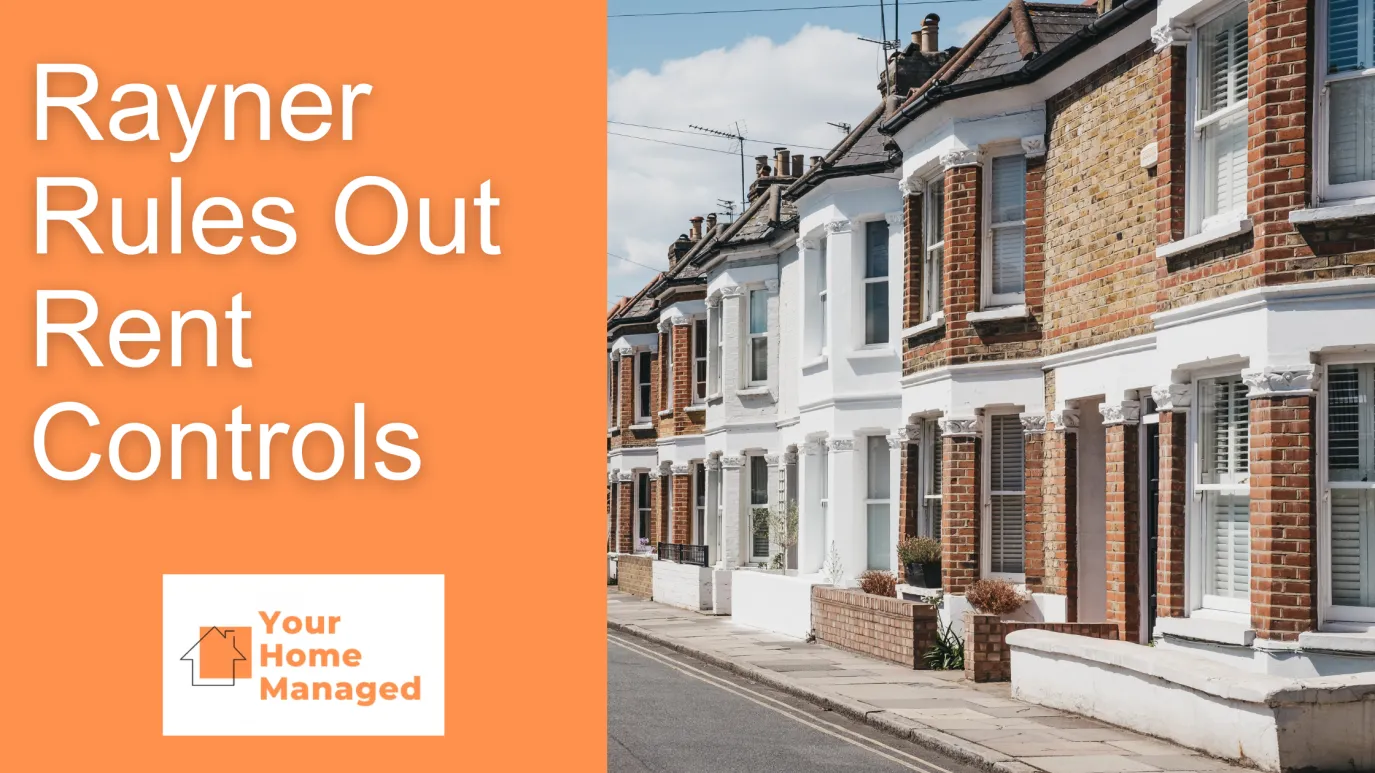
Rayner Rules Out Rent Controls
Jul 24th, 2026
Jul 24th, 2026
Since Andy Burnham became Prime Minister earlier this week, landlords, tenants and property professionals have all been wondering what his government might mean for housing.
From tax reform to new-build housing targets, the UK property market has been eagerly sifting through snippets of news and expert commentary, trying to work out 'what next'.
But one thing at least has been made clear, as Angela Rayner – back in the role of Housing Secretary, after HMRC cleared her of deliberate wrongdoing in the unpaid stamp duty saga – ruled out the introduction of rent controls.
That is something that will allow many London landlords to breathe a sigh of relief.
For the thousands of landlords we work with across South West London, that sigh of relief is well earned.
Since the Renters' Rights Act took effect in May, the sector has already been absorbing the biggest shake-up to the private rented market in a generation – the end of fixed-term tenancies, tighter restrictions on evictions, and rent increases now capped to once a year and pegged to a property's genuine open market rent.
Layering rent controls on top of that, while the market is still finding its feet, would have been a significant escalation. For now, that's off the table.
Rayner's reasoning may come as a surprise to many – not because they disagree with her, but because they will be surprised to hear it admitted.
She highlighted evidence rather than ideology, and in particular pointed to Scotland, which trialled temporary rent controls between October 2022 and last year.
The point she made is that these controls didn't necessarily bring rents down as intended – a pointed rebuttal to campaigners who present controls as a straightforward fix.
New Scottish legislation will allow ministers to designate rent-control areas from 2027, where increases could be limited to CPI plus 1%, subject to a maximum of 6%. Nevertheless, Rayner's message was pretty categoric: England will not be following that path – or at least, not yet.
Her argument is that the Renters' Rights Act is already doing the job. It has shifted the balance towards tenants through security of tenure and introduced a more straightforward means for tenants to challenge rent increases when they are truly unfair, without choking off supply.
More broadly, this announcement suggests the government believes increasing housing supply, rather than directly controlling prices, remains its preferred route to improving affordability. Whether that proves successful remains to be seen, but for now it indicates ministers are reluctant to introduce measures they believe could reduce investment in the private rented sector.
Nobody should mistake this for the end of the conversation, though.
Green Party leader Zack Polanski branded the decision "continuity Starmer."
Jeremy Corbyn called it "extremely disappointing.”
And it should be noted, of course, without making a political point of it, that Sadiq Khan's long-standing campaign for a London rent cap isn't going anywhere.
That matters for South London specifically, as it sits squarely in the sights of any future London-only proposal. We have a new Prime Minister who once called for rent freezes himself as Mayor of Greater Manchester, and who favours devolution of budgets and decision-making to regional and unitary authorities. For this reason, I think we have to be honest and say that this door isn't locked forever.
But it is shut for now.
Nothing changes today. What does apply, of course, is the Renters' Rights Act:
Fixed-term assured tenancies have been replaced by rolling periodic tenancies.
Section 21 has been abolished to prevent no-fault evictions; tenants can be evicted from properties, but it must be grounds-based (that can include the need to sell the property or for the landlord (or a family member) to occupy it).
Rent increases are limited to once a year, and must reflect the property's genuine open market rent.
Rent controls are still a live issue even if they have been ruled out as a policy move for now. However, the clearer framework established by the Renters’ Rights Act makes it more likely that – provided the market complies – further controls will continue to be considered unnecessary and, economically speaking, potentially unhelpful.
The sensible response now is about preparation; making sure your rent-setting and paperwork are fully in line with the Act, so you're not caught out by whatever comes next. We can help you with that.
According to figures from insights data and insights provider Dataloft, the average rent in South West London has reached £2,074 per month, an increase of 9% over 12 months – but this varies widely between houses at an average of £2,340 per month, and flats at an average of £1,943. It can also change quite significantly, borough by borough, neighbourhood by neighbourhood. Average rent in Balham comes in at £2,235 per month, having risen 9% over 12 months, as per the overall South West London trend; in Morden, however, rents have risen by only 1% during the same period, to an average of £1,549 per month.
If you are letting out property in South West London, it makes a lot of sense to get an honest and up-to-date rental assessment to make sure you are receiving market rent – and a rent that can’t be successfully challenged at tribunal.
Get in touch with our friendly team and we can put your mind at rest.
We use cookies to give you the best possible experience on our site.
For more information click here.